The Back Room
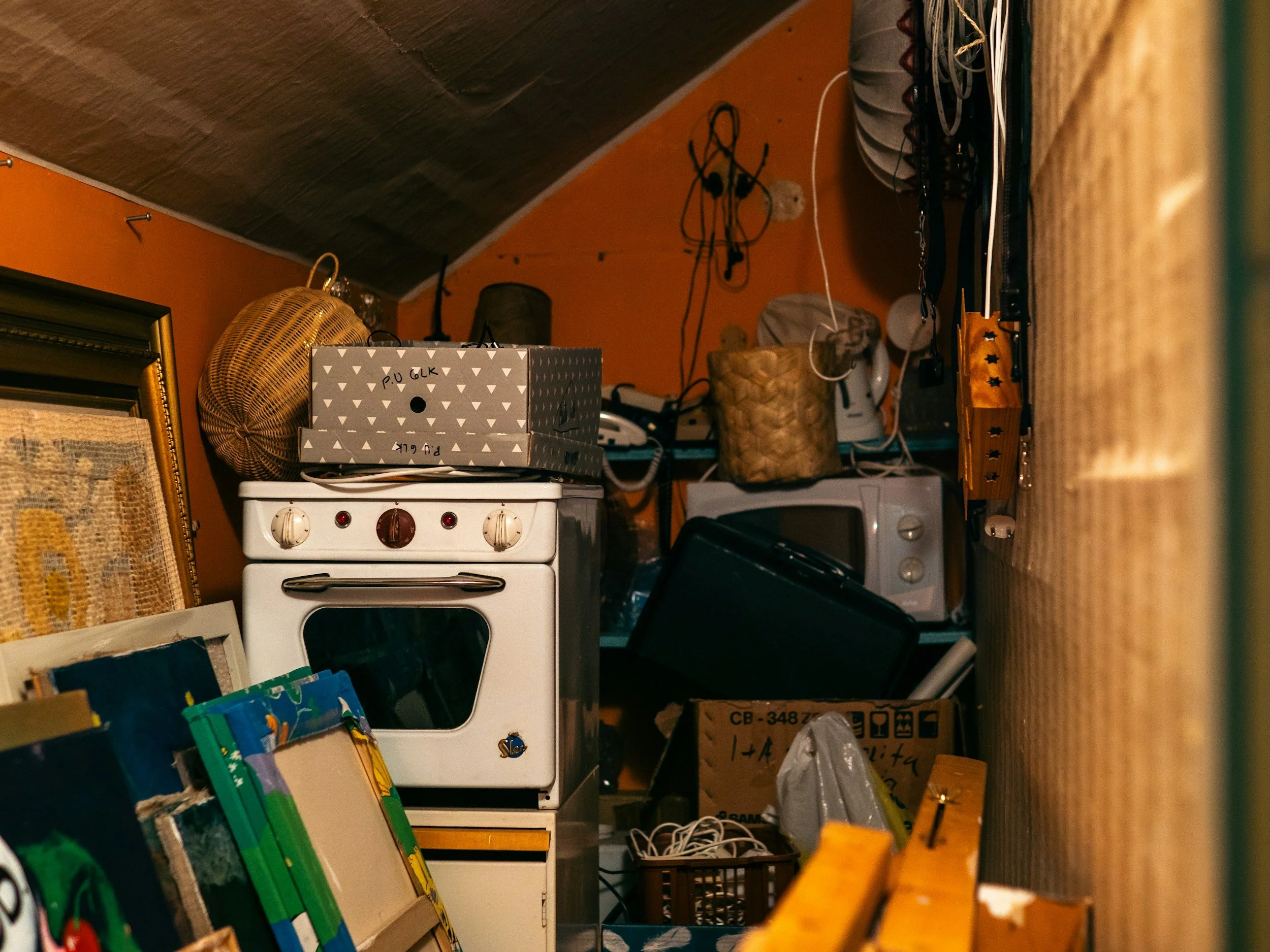
Image of a cluttered attic space with a range of items including old paintings, suitcases, baskets and kitchen appliances
I love metaphors. They are not for everyone, I know, but there’s something about imagining a thing as another thing that just seems to help me understand all kinds of experiences a little bit better.
One of my favourites is related to one of the ways I understand therapy. I share this with clients quite often, and I think it gets to the heart of what the work is – or can be. It’s this: many of us have a back room (or a spare cupboard, or a dark corner) where we push things out of sight. Maybe because we really believe we’ll need them later, or because they remind us of someone, something or sometime, or we feel obligated to hang on to them for reasons we can’t quite explain. Maybe some things we feel slightly superstitious about, or we worry that the person who gave them to us will find out if we get rid of them, so we hang on…just in case. Sometimes, it’s just that we don’t have time to stop and think about these things and sort through them, so we stick them in the back room to sort out later.
The problem here is that, inevitably, we start running out of space. The door won’t shut properly, or every time you try to get something out of the room it takes ages to find what you need. But sorting it out it is a daunting, overwhelming task. There is a very good chance it’s going to get a lot messier before it gets better. And trying to do all that alone is much, much harder than having someone by your side to help you through it. I did the actual, literal version of this earlier this year when moving house, after a decade in one home with three children. There was a LOT to sort through. I would get stuck, a lot. Then, my sibling came along and started picking things up and just asking, “keep or not keep?” There was something magical about the simplicity of that question, and having someone else ask it, that made it so much easier to work through all of the everything.
Our emotional and psychological “stuff” is collected in much the same way. There are things we didn’t have space to process at the time, there are patterns of relating and ways of thinking that we were gifted – well meaning or not, intentionally or not. Habits we learned instinctively in order to survive circumstances that are long gone. And we add to it all the time. We don’t always know what’s in there until we start pulling it out, and that can be really bloody scary and overwhelming in the beginning. There are often moments that all you want to do is shove it back in and pretend you never started. But it is so much more possible with someone by your side. If you feel as though you don’t know where to start, or what you’d even talk about, that’s ok. Counselling is about figuring that out together, and taking the time to sort through it all with compassion, and without judgement. And it can also be about learning new processes and systems to help keep things in order going forward – much easier to do once you’ve worked out what you’ve got.